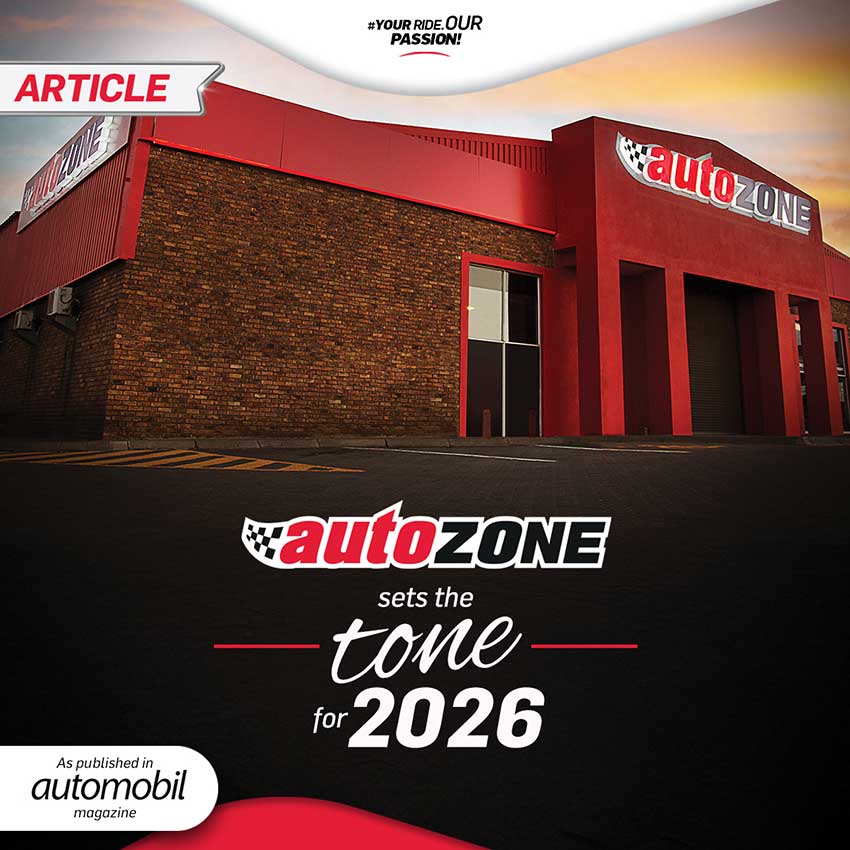
AutoZone sets the tone for 2026
As first published in Automobil Magazine. To read the edition, click here
As South Africa’s automotive aftermarket prepares to navigate another year of change, Michael Da Paixao, Divisional Executive of AutoZone, offers a clear-eyed perspective of what lies ahead.
Speaking to Automobil, he outlines how the company positions itself to meet evolving customer expectations while addressing broader challenges facing workshops, motorists, and the industry at large.
A rapid shifting landscape
The types of vehicles on South African roads continue to diversify, customers remain acutely price conscious, and the demand for immediate availability has never been higher.
Whether serving a motorist or a workshop owner, the expectation is simple but demanding: the right part, at the right price, when it’s needed. For AutoZone, meeting this expectation requires staying closely connected to market realities.
“We continuously analyse the national vehicle parc, the total population of vehicles on the road, and expand our product range where demand is strongest. We work with trusted suppliers to improve availability,” explains Da Paixao.
He says AutoZone invests in systems and processes that allow teams to respond faster and more consistently. This year, the company will continue to focus on being reliable, relevant, and easy to do business with for both motorists and trade customers.
Lessons learned, focus sharpened
Operating under the Metair Aftermarket Parts and Retail vertical, AutoZone has emerged from recent years with a clearer understanding of what truly drives a sustainable aftermarket business. Strong fundamentals matter more than scale alone.
These lessons now drive a clear future focus centred on dependable stock availability, efficient and responsive logistics, empowered branches, and a culture rooted in customer service.
“Operational discipline, consistency, and staying close to customers and frontline teams are essential to long-term success,” emphasises Da Paixao.
He adds that every strategic decision is driven by a simple principle: improve the customer experience and strengthen the business for the long term. This approach positions the company to grow responsibly, remain relevant, and deliver consistent value.
Adapting to new vehicle brands
One of the most visible changes in the automotive industry is the rapid growth of Chinese vehicle brands. While many of these vehicles are still relatively new, strong demand already exists for service and maintenance parts.
“We’re responding by ensuring consistent availability of common consumables while actively researching new models. We work with local and international suppliers to introduce quality aftermarket parts as they become available,” says Da Paixao.
AutoZone ensures accurate vehicle data and provides ongoing product training so teams can confidently support both motorists and workshops.
For DIY motorists, using quality parts and following correct maintenance practices is more important than ever as modern vehicles become more advanced. For workshops, staying competitive will depend on professionalism, transparency, and continuous learning.
Addressing the skills crisis
The skills gap remains a major challenge, and AutoZone believes that skills development is a shared responsibility across the value chain. The company supports supplier-led training, industry partnerships and internal development programmes aimed at building practical, job-ready skills.
AutoZone sponsors a motor mechanic apprenticeship and operates an internal training department focused on developing people within the business. However, to professionalise emerging mechanics, Da Paixao insists that closer collaboration between retailers, workshops, suppliers, and industry bodies is required.
Looking at what workshops and technicians should do now to future-proof their businesses, Da Paixao identifies three critical areas: training, operational efficiency, and customer trust.
“Investing in skills is no longer optional. Neither is running a business professionally, which includes keeping records, managing stock, and using basic digital tools,” he states.
Workshops that adapt to changing technology while maintaining high service standards will remain relevant and competitive. AutoZone supports the industry through engagement, compliance, and education.
By working together on training, accreditation, and awareness, the aftermarket can raise overall standards and help informal operators transition into safer, more sustainable businesses.
The balance between affordability and safety
Da Paixao addresses the question of balancing affordability with quality and safety, particularly pertinent in a tough economy. “Affordability matters. But it should never compromise safety,” he asserts.
“True value comes from using parts that are fit for purpose, carry warranties, are reliable and are supported by knowledgeable professionals. Choosing reputable parts reduces long-term costs and protects both vehicles and drivers. Cutting corners often leads to greater expense and risk down the line.”
Today’s customers expect speed, transparency, and convenience. “They value clear communication, fair pricing, and confidence in the work performed. Workshops that invest in skills, diagnostics, and relationships will continue to grow,” says Da Paixao.
While digital tools enhance the customer experience, Da Paixao argues that they can’t replace personal service. “Businesses that combine knowledgeable staff with accessible digital platforms will earn trust and loyalty.”
Rising new vehicle sales present an interesting dynamic for the aftermarket. Today’s sales represent tomorrow’s aftermarket demand. While service intervals may initially be longer, the need for maintenance and repairs will continue over time.
“Companies that prepare by understanding new technologies, plan parts availability, and build early customer relationships will position themselves well when vehicles move out of warranty,” continues Da Paixao.
Responsibility beyond the bottom line
Da Paixao says corporate social responsibility continues to evolve in the automotive sector, moving towards long-term, practical impact. This includes education, skills development, road safety, and environmental responsibility.
Through Lions BrightSight, a vision care initiative, AutoZone collects used spectacle frames at all branches to support access to eye care for the less fortunate. Selected branches also collect used motor oil in partnership with the ROSE Foundation, promoting responsible and structured recycling.
“By working together, industry players support communities while strengthening the sustainability and reputation of the sector,” he says.
Cautious Confidence
As the industry looks ahead to 2026, the message from AutoZone is one of cautious confidence.
The challenges are real, but so are the opportunities for those willing to invest in fundamentals, adapt to change and maintain a relentless focus on customer service.
For workshops, motorists, and industry partners alike, the path forward requires professionalism, continuous learning and a commitment to quality that never wavers, regardless of economical pressures.
“Those who embrace these principles will not only survive but thrive in the year ahead,” Da Paixao concludes.

