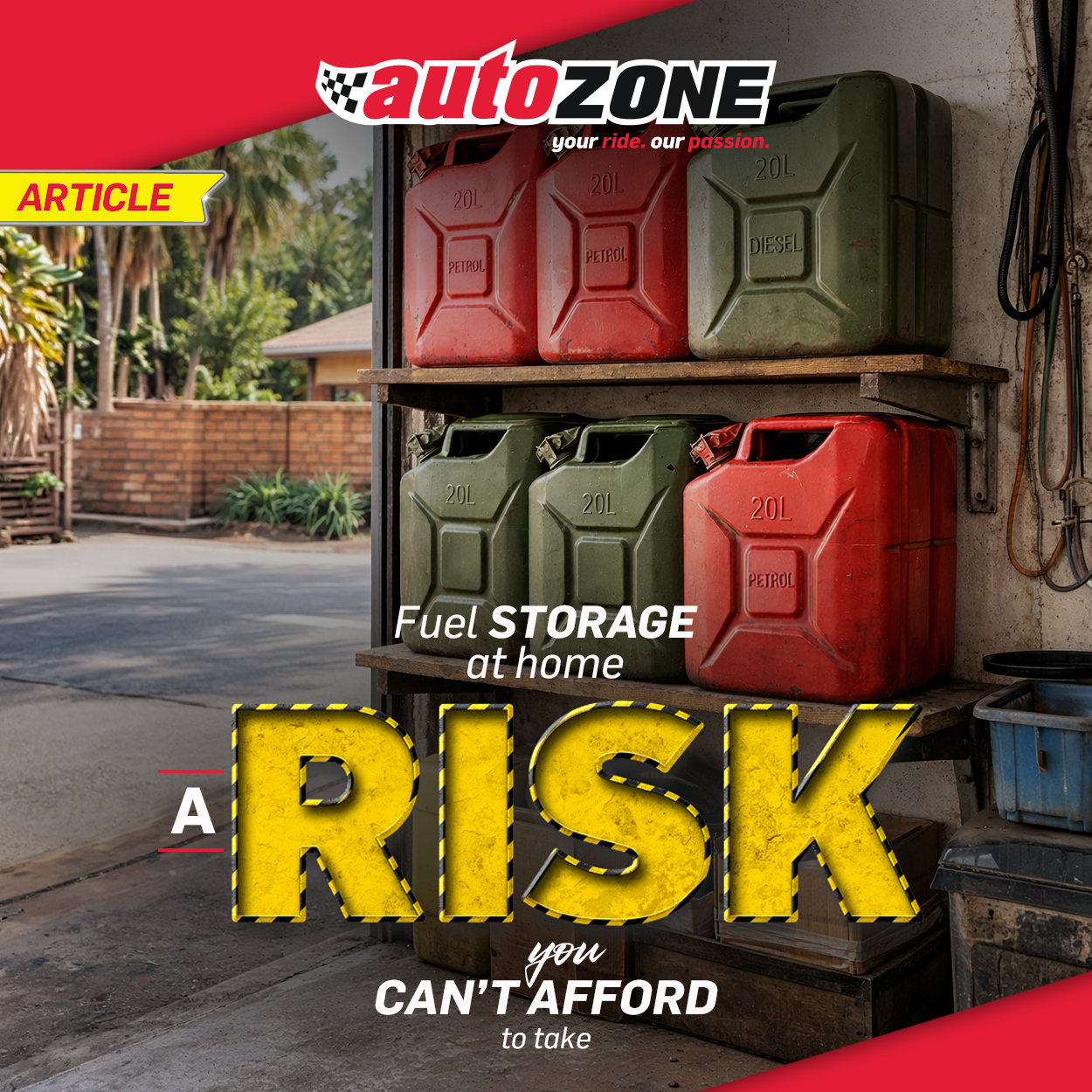
Fuel Storage at Home: A Risk You Can’t Afford to Take
As fuel prices rise and concerns around supply continue to surface, more South Africans are considering storing fuel at home. While the intention may be practical, the risks are significant, and often misunderstood.
A recent article by Eyewitness News (https://www.ewn.co.za/2026/04/07/sa-insurance-association-warns-public-about-risks-of-storing-fuel-at-home) highlights growing concern from the South African Insurance Association (SAIA), warning that this trend could have serious consequences for both safety and insurance cover.
Understanding the Legal Risk
One of the most important points raised in the article is that fuel storage is not simply a personal choice – it is regulated.
According to SAIA, “storing fuel above local limits constitutes a breach of legislation.”
This means that exceeding the permitted amount of fuel at home does not just increase danger – it also places homeowners on the wrong side of the law.
Insurance Implications
Beyond legality, there is a financial risk many consumers may not be aware of.
The article notes that insurers may reject claims where unsafe or non-compliant fuel storage is involved. In practical terms, this means that if a fire or damage occurs and stored fuel contributed to the incident, policyholders could find themselves without cover.
A Serious Safety Concern
Fuel is highly flammable, and improper storage can quickly turn a manageable situation into a disaster.
Even small amounts, if stored incorrectly or too close to heat sources, can pose a threat. The presence of fuel can also accelerate the spread and intensity of fires, putting lives and property at greater risk.
A Clear Recommendation
Perhaps the most direct guidance comes from the SAIA itself, as consumers are urged to reconsider the practice altogether, with a warning to “avoid storing petrol at home.”
Responsible Fuel Storage
If fuel must be stored, it should be done responsibly by:
- Staying within the legal limits
- Using approved containers
- Storing fuel in well-ventilated areas away from living spaces
- Keeping it far away from any ignition sources
But ultimately, the safest approach is to avoid unnecessary storage altogether.
The Reality South Africans Need to Understand
Preparedness should never come at the expense of safety or compliance.
As highlighted by the SAIA, the risks tied to fuel storage are not theoretical; they are real and they carry legal, financial, and safety consequences. When legislation is breached and insurance cover is compromised, what may seem like a precaution can quickly become a liability.
The guidance is clear: avoid storing petrol at home.

